Resources to Help Parents Talk with Kids After the Death of a Loved One
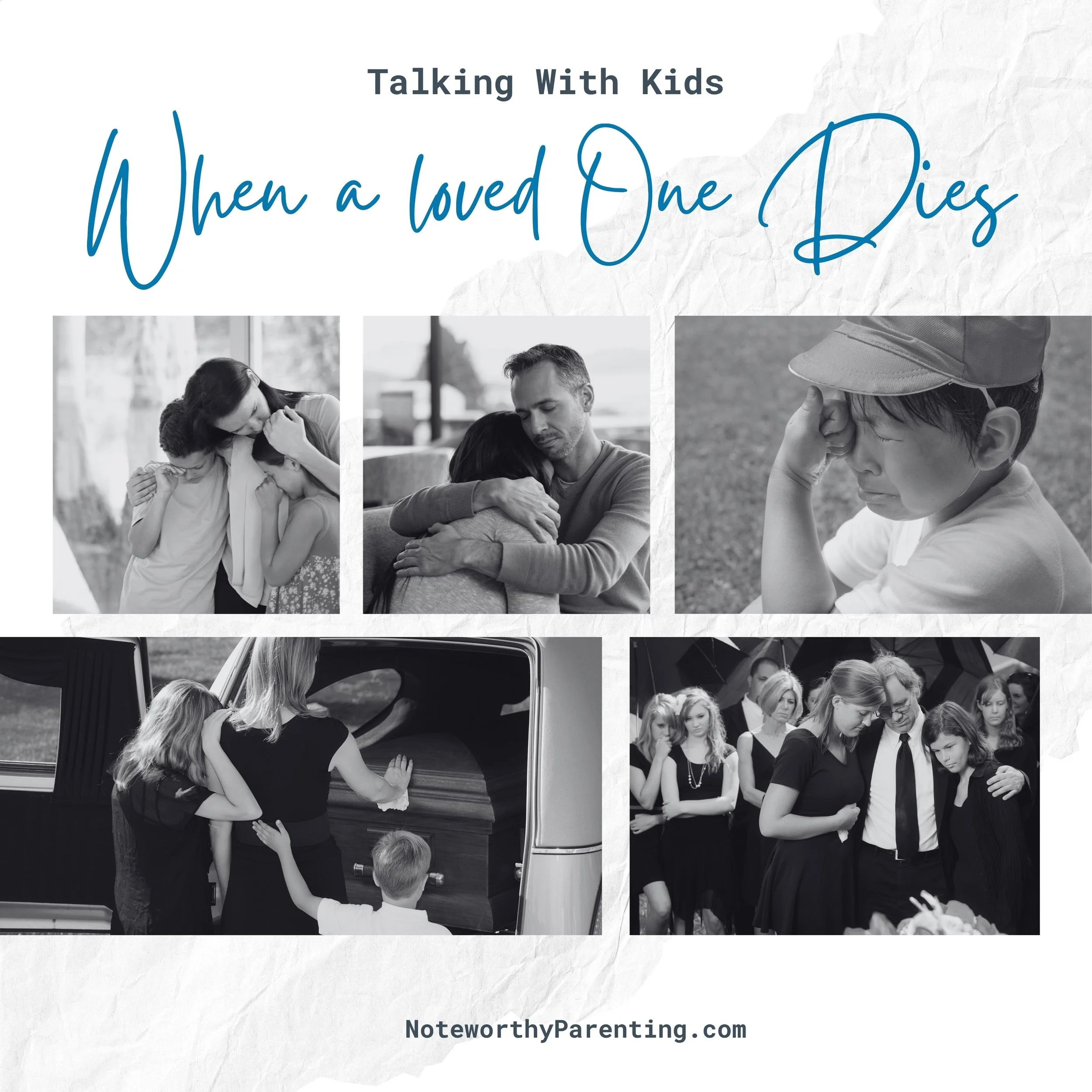
When a loved one dies, we as parents are often grieving while also trying to help our children understand what has happened. Finding the right words can feel overwhelming, especially as we are struggling with our own emotions.
How do you explain death in a way a child can understand?
How do you answer their questions honestly and appropriately?
How do you support them as they grieve?
Children process grief differently from adults, and they often need simple, clear language and reassurance. While we do not need to seek the perfect words in this moment, books can be valuable tools for helping us begin these difficult conversations. They provide age-appropriate vocabulary, introduce important concepts about death and grief, and create opportunities for children to ask questions and express their feelings. They also help us find our words when we are unable, through our own grief, to sort out what to say.
Many books can help guide these conversations. Here are a few I recommend. Read them ahead of time and adapt the conversation to your child and your family’s needs. Emphasize what feels most helpful, skip what doesn’t, and consider choosing books that reflect your family’s cultural or religious beliefs about death and dying.
BOOKS:
When Someone Dies by Andrea Dorn, MSW. This book offers so much help to parents! It starts by easing into the topic, and there are questions on most pages to guide conversations. This book has several pages of strategies to help kids with their feelings. In the back, there is a page of definitions and extended descriptions of emotions. There is also a guide to talking with kids at each age.
The Memory Box: A Book About Grief by Joanna Rowland. A book to help kids process their grief and a way to hold on to memories and the memories of other family members. There is a resource page for parents in the back as well for more talking points and perspectives to consider.
Tom’s Great-Grandma Eileen by Kate Melton. This book starts with Tom asking about a photo of a relative who has passed away a while ago. His mother shares all about the life of her grandmother. It is a good book to expose kids to the reality of dying during an everyday moment, rather than right after someone has passed. It gives kids some background, so that when the time comes, you can refer back to the story as you talk with your kids.
TIPS:
Talk with kids about their feelings, and that they may have many different feelings as they grieve this loss. Sometimes after so much sadness, people begin telling stories of their loved one and begin laughing.
If your child(ren) will attend funeral services, give them an idea of what to expect. Will there be a viewing? Will there be prayers and songs? Will they go to the cemetery?
Let teachers and caregivers know of the loss, so kids can be supported as needed as they return to their routines.
Retell favorite memories or sayings as a way to relive the joyful life of a person who has died.
HANDS-ON WAYS TO HELP KIDS WITH GRIEF:
Drawing pictures can help kids sort their feelings or share how they feel when they cannot find the words.
Create a small photo album of favorite pictures and memories of the lost loved one.
Give kids a journal to write about their feelings and memories.
If prayers are a part of your routine, add extra time for kids to include their personal wishes at this time.
Talking with kids during everyday moments when the topic of death pops up is also helpful, for example when a character dies in a story or a movie. Talk about the situation and the other characters' emotions.
If a friend or neighbor loses a loved one, talk with your kids about how you can support them with cards, letters, flowers, or a meal. Sometimes that may mean going to a service and showing up for others.
Visit the relative’s grave to bring flowers and share stories.
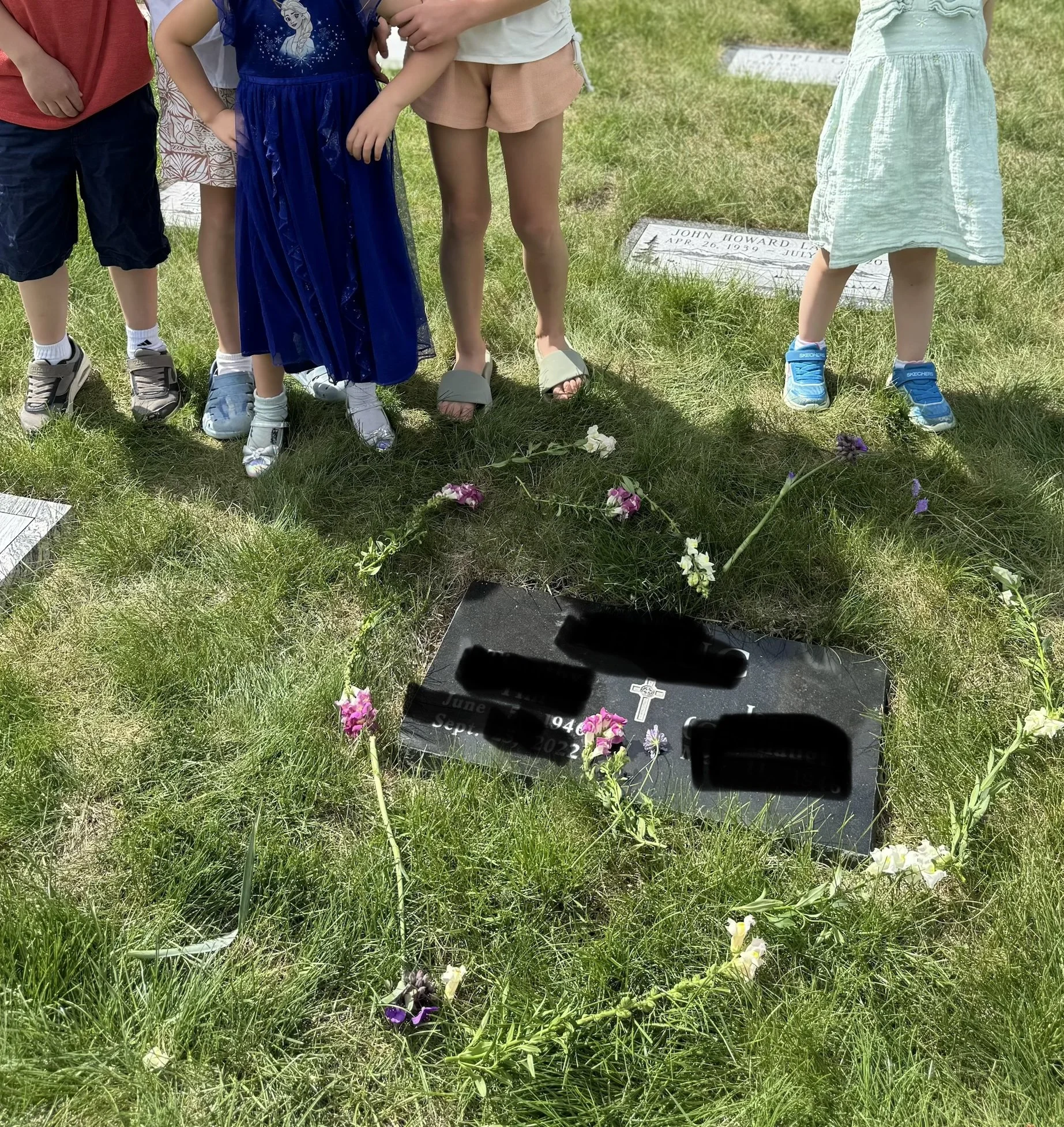
My Dad’s grandkids and great-grandkids leaving flowers at his grave for his birthday. We meet as a family every year to do this.
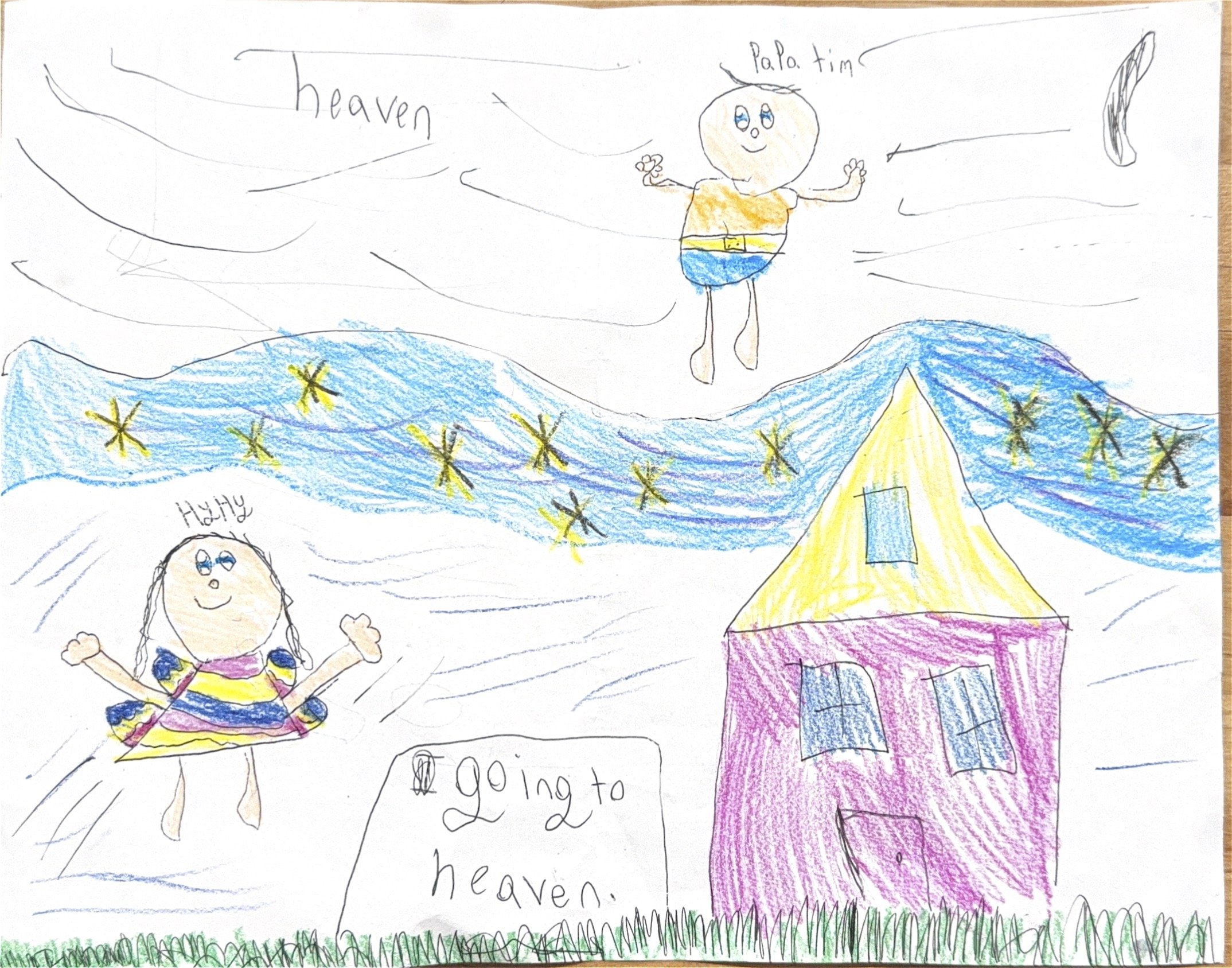
A picture by my niece about where grandpa is.
I hope this post is helpful whether you are in the midst of a loss or you are thinking this is a helpful resource and decide to create a plan for talking with your kids about when a loved one dies. Please feel free to add any of your ideas and resources in the comments in order to help other parents!
Check out these other posts for great additions to your parenting plans:
Winning or Losing: Tips for Mentoring Kids When Competing Emotions Take Over
Fun Ways to Teach and Mentor Gratitude to Your Kids
The Donation Birthday: A Party with Purpose
Book Graffiti for Parents: 5 Ways to Hack Parenting Books to Get to the Advice You Need
Empower your parenting by creating your Unique Parenting Plans!
It’s easy!
Click below and BEGIN with the Noteworthy Parenting book!

I love sharing fun and useful products for parents! Some of the links I use are affiliate links, including those for Amazon.com. I get a small commission, at no additional charge, if you purchase through any links. The commission funds this site to bring parents fun and helpful content! Thank you!